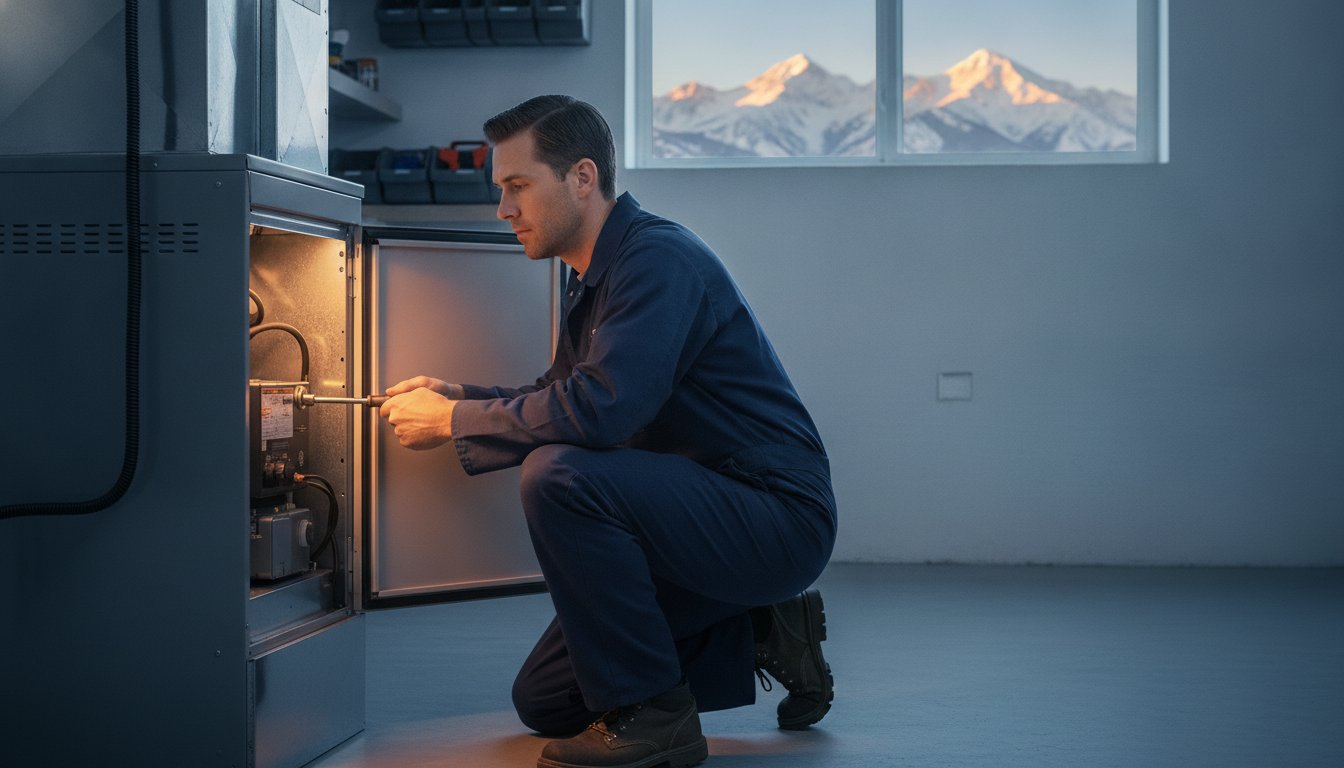
Imagine waking up at 2:00 AM to find your breath misting in your own bedroom because the heating system finally quit during a brutal Wasatch Front cold snap. It's a high-stress moment that leaves you worried about more than just the freezing temperatures; you're likely concerned about potential gas leaks or the fear of being overcharged for a simple fix. We know that when you need furnace repair Cottonwood Heights UT, you aren't just looking for a random technician. You're looking for a local expert who can restore your family's safety and comfort before the house gets any colder.
You deserve an immediate return to a warm home and a transparent, honest explanation of the fix. Our team provides professional repairs tailored to the unique demands our high-altitude mountain climate places on your equipment. We'll show you how to handle emergency breakdowns, stay compliant with the new July 2026 Utah energy codes, and even how to claim Enbridge or Rocky Mountain Power rebates. By the end of this article, you'll know exactly how to ensure your system stays reliable and efficient for the long haul.
Key Takeaways
- Identify critical safety warnings like yellow burner flames and unusual noises before they lead to total system failure or safety hazards.
- Learn how Cottonwood Heights’ high elevation and winter snow specifically impact your furnace's combustion air and intake systems.
- Apply the "50% Rule" to make a smart financial decision between a temporary fix and a high-efficiency system replacement.
- Find out exactly what to expect during a professional call for furnace repair Cottonwood Heights UT, from safety inspections to transparent quoting.
- Discover how specialized mountain-climate expertise ensures your heating system remains reliable and efficient throughout the harshest Utah winters.
Signs You Need Professional Furnace Repair in Cottonwood Heights
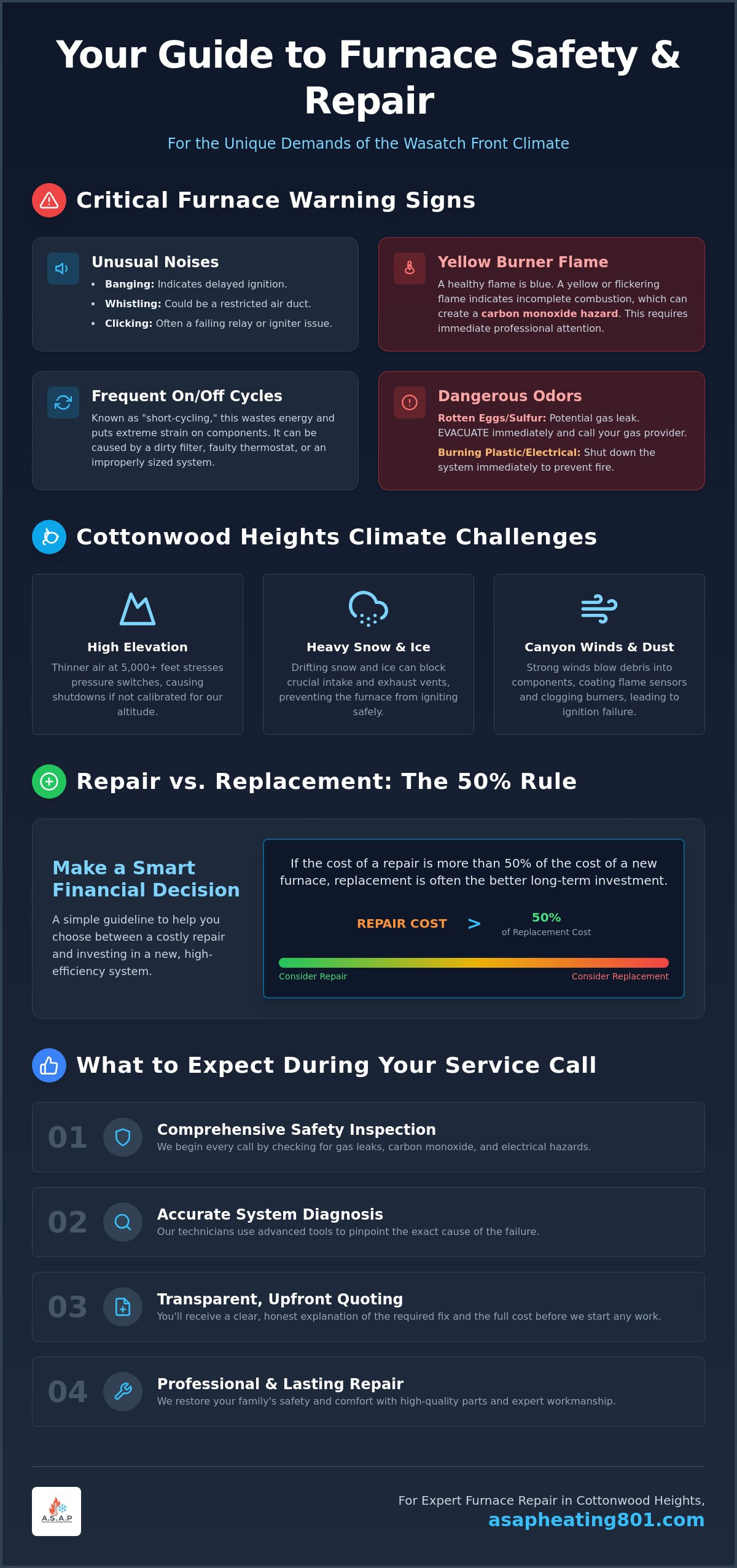
Your furnace usually speaks to you before it quits entirely. If you hear loud banging when the heat kicks on, it's often a sign of delayed ignition. Whistling sounds might mean a restricted return air duct, while persistent clicking usually points to a failing relay or an issue with the igniter. Understanding how a central furnace works helps you realize these aren't just annoying quirks; they're urgent calls for help. When these symptoms appear, scheduling furnace repair Cottonwood Heights UT is the only way to ensure your family's safety and comfort.
A steady blue flame is the goal for any healthy gas furnace. If you look through the burner window and see a yellow or flickering flame, it's a major safety warning. This change in color indicates incomplete combustion, which can lead to carbon monoxide buildup. This isn't a problem that fixes itself. It requires a professional to adjust the fuel-to-air ratio or clean the burner assembly. We often find that what looks like a total system failure is actually a simple sensor cleaning, but we also check for the more serious threat of a cracked heat exchanger during every visit.
The Danger of Short-Cycling
Short-cycling happens when your furnace turns on and off too frequently without finishing a full heating cycle. This wastes energy and puts massive strain on the blower motor. Sometimes it's just a dirty air filter blocking airflow, which is a quick fix you can handle yourself. However, it can also stem from a faulty thermostat or an oversized unit struggling with the mountain air. In Cottonwood Heights, our rapid temperature drops from the canyons can trigger this behavior if your system isn't calibrated correctly. Don't let your blower motor burn out from the constant starting and stopping.
Odd Smells and Safety Concerns
Don't panic if you smell dust burning during the first freeze of the year. That's usually just settled debris on the heat exchanger. But if you smell an electrical "burning plastic" odor, shut the system down immediately. This often means wires are melting or the motor is overheating. If you smell rotten eggs or sulfur, that's a gas leak. Open the windows, get everyone out of the house, and call your gas provider. Always keep working carbon monoxide detectors on every floor. It's the best way to stay safe while we work to get your heat back online.
Common Causes of Furnace Failure in the Utah Climate
Cottonwood Heights sits at a significantly higher elevation than much of the Salt Lake Valley. This isn't just about the mountain views; it fundamentally changes the physics of how your heating system operates. Thinner air at 5,000 feet means your furnace's pressure switches are under constant stress. These switches are safety devices that ensure there's enough airflow for a clean burn. If they aren't calibrated for our specific altitude, they'll trip and shut your system down, even if the parts are technically functional. This is one of the most common reasons homeowners call for furnace repair Cottonwood Heights UT during the first real cold snap.
Heavy Utah winters bring another unique challenge: blocked intake and exhaust vents. High-efficiency furnaces rely on PVC pipes that typically exit through the side of your home. During a major Wasatch snowstorm, drifts can easily bury these vents. Even if the snow doesn't cover them, ice from roof runoff can freeze over the openings. When your furnace can't "breathe" properly, it will refuse to ignite to prevent dangerous gases from backing up into your living space. Keeping these pipes clear is a vital part of maintaining your furnace or boiler and avoiding an emergency midnight service call.
Those famous canyon winds also play a role in system failure. They don't just blow leaves around; they push fine dust and valley debris into your unit's internal components. Over time, this buildup coats flame sensors and clogs burners, leading to the ignition failures we see every winter. If your system is struggling to stay on, you likely need a professional furnace repair Cottonwood Heights UT to clean and recalibrate your equipment for our specific environment.
Ignition and Pilot Light Issues
If your pilot light keeps going out, it's often due to a draft from canyon winds or a failing thermocouple. The thermocouple is a small safety sensor that tells the gas valve it's safe to stay open. If it's dirty or bent, it shuts off the gas to prevent a leak. While older homes still use standing pilots, modern systems rely on electronic igniters. These components are sensitive to the Wasatch Front's rapid temperature swings, which cause the metal to expand and contract until it eventually cracks and fails.
Blower Motor and Airflow Obstructions
High-altitude air density also changes how your blower motor performs. Because the air is less dense here, the motor often has to work harder to move the same amount of heat through your home. This extra strain leads to premature wear or overheating. When airflow is restricted by dust or a poorly calibrated blower, the heat exchanger can reach dangerously high temperatures. This stress eventually leads to cracks, which are the leading cause of furnace replacements in Salt Lake County.
Furnace Repair vs. Replacement: Making the Right Choice
Deciding between a quick fix and a full system upgrade is a common dilemma for Salt Lake County homeowners. We recommend using the "50% Rule" as a starting point. If the cost of your furnace repair Cottonwood Heights UT exceeds half the price of a new unit, it's usually time to replace. In our harsh mountain environment, a system over 15 years old is often living on borrowed time. The elevation and rapid temperature swings discussed earlier put immense stress on internal metal. If you've called for service three times in the last two seasons, those individual repair bills are likely chasing a lost cause.
Consider the AFUE (Annual Fuel Utilization Efficiency) rating of your current unit. An older 80% AFUE furnace wastes 20 cents of every dollar on your utility bill. Upgrading to a 97.5% AFUE model can drastically lower your monthly costs. This is especially true with 2026 Enbridge rebates offering up to $350 for these high-efficiency models. While we're looking at your system, we also suggest upgrading the air filter in your furnace to a MERV 13. This simple change protects your heat exchanger and significantly improves your home's indoor air quality.
When a Repair is the Smart Move
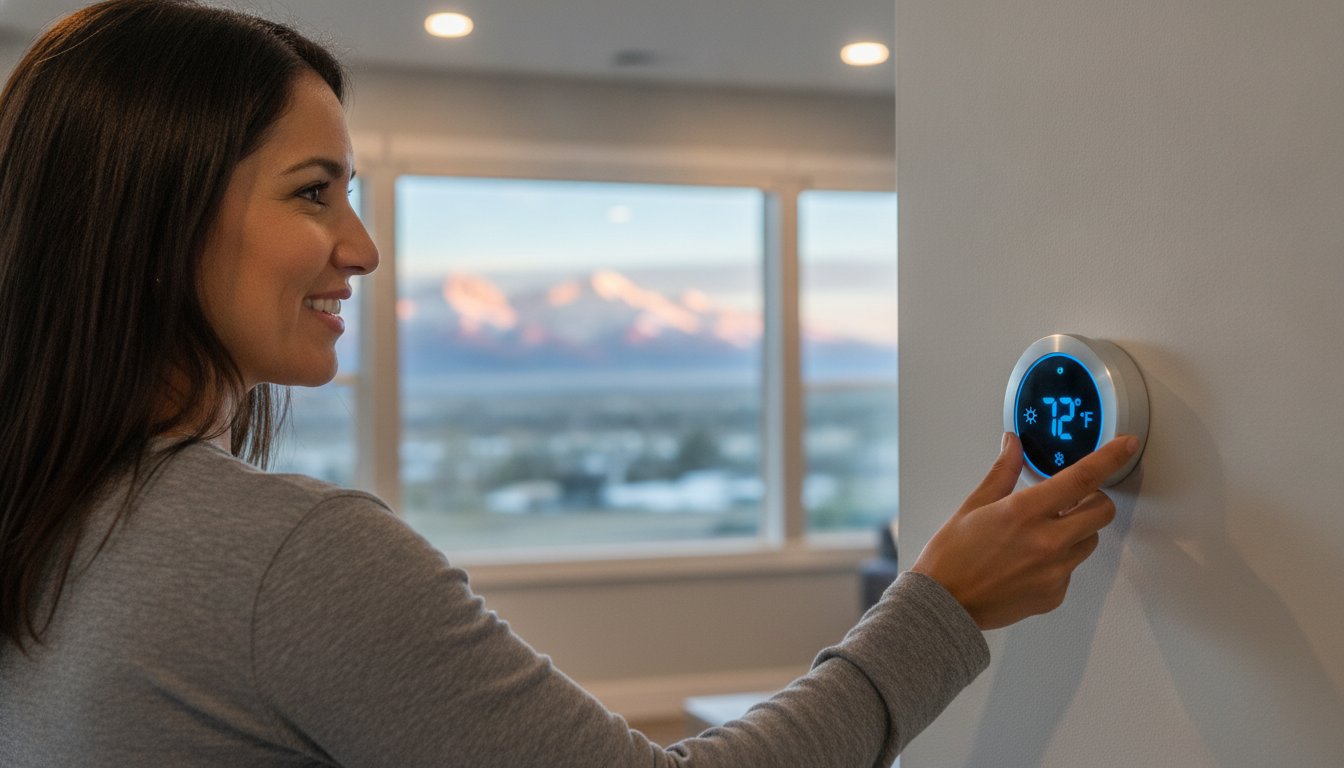
If your system is under 10 years old, a repair is often the most sensible financial path. Minor failures like a bad capacitor, a cracked ignitor, or a dirty flame sensor are routine fixes. These components are relatively inexpensive and don't signal the end of the system's life. Sometimes the issue isn't even the furnace itself. A professional thermostat installation can often resolve communication errors that mimic mechanical failure. If your unit is still under its original manufacturer warranty, always opt for the repair first.
Signs Replacement is Unavoidable
A cracked heat exchanger is a non-negotiable replacement. It's a lethal safety hazard that can leak carbon monoxide into your living space. If your home has persistent cold spots or uneven heating that simple fixes can't solve, your system is likely failing or improperly sized. With the new Utah energy codes effective July 1, 2026, modern units are built to meet higher insulation and duct standards. You can also leverage Rocky Mountain Power rebates, which provide up to $2,050 for dual-fuel heat pumps that pair perfectly with a high-efficiency gas furnace for maximum Salt Lake County savings.
What to Expect During Your ASAP Heating Service Call
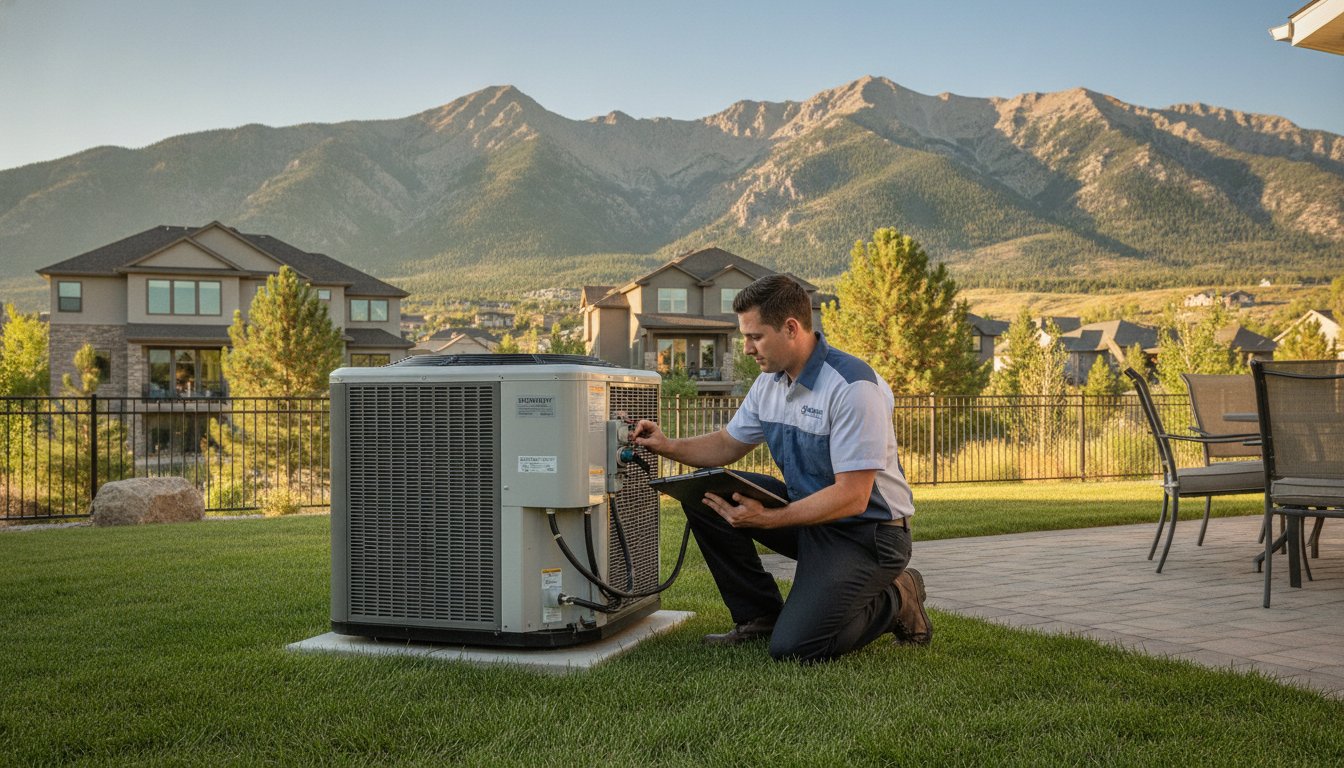
When your heating system fails during a Utah winter, the priority is getting the temperature back up safely. Our service call process is designed to eliminate the guesswork and stress often associated with HVAC issues. We start with a comprehensive safety inspection. This isn't a surface-level glance; we look at the entire system to ensure every component is functioning correctly. By the time we start the actual furnace repair Cottonwood Heights UT, we have a complete map of your unit's health and a clear path forward.
Our Diagnostic Process
A thorough diagnostic is the backbone of a reliable repair. We start by checking the heat exchanger for structural integrity and microscopic cracks. Even a tiny fissure can lead to safety hazards. Next, we test your electrical connections and thermostat signal accuracy to rule out communication errors that often mimic mechanical failure. Finally, we measure gas pressure and airflow volume. This data tells us if your system is operating at peak efficiency or if it's struggling against the mountain air density we discussed earlier. We don't guess; we measure.
Precision matters in our high-altitude climate. We only use high-quality parts that are specifically compatible with your furnace model. This ensures the fix lasts through the season instead of just being a temporary patch. After the repair is complete, we perform a total system calibration to optimize performance. We also conduct a final carbon monoxide test to verify that your home is safe for your family. You won't find hidden fees or surprise charges here; just honest work and a warm home.
Transparent Communication
We believe you should understand what's happening inside your utility room. We'll explain the root cause of the failure before we start any work. If there are multiple ways to address the problem, we'll provide options that fit your budget and long-term comfort goals. Once the work is done, we'll walk you through the repair. We want to make sure you know exactly how to operate your system for maximum efficiency. If you're ready to get your home warm again, schedule your expert diagnostic call today.
Why Cottonwood Heights Trusts ASAP Heating & Air Duct
Living at the base of the Wasatch Mountains requires a specific type of resilience. We don't just work here; we live here. Our team has deep roots in the Cottonwood Heights and Salt Lake County community. This local connection means we understand exactly how a sudden canyon wind or a heavy lake-effect snowstorm impacts your home's comfort. When you call for furnace repair Cottonwood Heights UT, you're getting a neighbor who understands the urgency of a freezing house during a Utah winter. We prioritize rapid response because we know that a failed furnace isn't just an inconvenience; it's a safety emergency for your family.
Locally Owned and Operated
There's a significant benefit to working with technicians who navigate the same snowy streets you do. We stay ahead of the curve with local requirements, including the 2026 transition to the new H100 HVAC Qualifier License required by the Utah Division of Occupational and Professional Licensing (DOPL). Our team is fully insured, meeting the 2026 state requirement for a minimum of $100,000 per incident and $300,000 aggregate coverage. This commitment to professional standards reflects our dedication to the community we serve. We aren't an arctalan big-box company. We're a specialized team that knows the specific building codes and utility nuances of the Wasatch Front.
The heating industry in Utah has grown at an average annual rate of 5.1% from 2021 to 2026, according to IBISWorld. This growth is driven by neighbors who value honesty over high-pressure sales. Our focus remains on restoring your safety and comfort. We'll never push for a replacement if a reliable repair is the better option for your budget. We provide the stability and security you need when a technical failure threatens your peace of mind.
Comprehensive HVAC Solutions
Our expertise extends beyond traditional gas furnaces. We're skilled in servicing modern heat pumps and ductless mini-split systems, ensuring your home stays efficient year-round. We also emphasize the importance of preventive maintenance. Regular tune-ups can improve system efficiency by up to 25%, according to data from Kron West. This helps you avoid the stress of an emergency breakdown during the coldest months. Whether you need a simple sensor cleaning or a complex motor replacement, we have the specialized tools and training to handle mountain-climate challenges. We're here to provide long-term reliability, not just a quick fix.
Don't wait for the next storm to leave you in the cold. Schedule your expert furnace repair in Cottonwood Heights now!
Secure Your Home's Comfort This Winter
Don't let a sudden breakdown or a strange noise turn into a freezing midnight emergency. You now know the critical signs of system failure, from yellow burner flames to the strain our high-altitude air puts on your blower motor. Whether you're applying the 50% rule to decide on a replacement or just need a specialized sensor cleaning, having a local partner makes all the difference. We're locally owned and operated in Salt Lake County, meaning we understand the unique challenges the Wasatch Front climate poses to your heating system.
Our team is ready to restore your safety and peace of mind with specialized high-altitude HVAC performance and 24/7 emergency heating services. We focus on transparent fixes and long-term reliability so you can stop worrying about your utility bills and start enjoying a warm home again. If you need professional furnace repair Cottonwood Heights UT, we're just a call away and ready to help.
Get Fast Furnace Repair in Cottonwood Heights - Call ASAP Heating Today!
Frequently Asked Questions
How much does furnace repair typically cost in Cottonwood Heights?
Repair costs vary depending on the specific component that failed and the age of your system. While we cannot provide fixed pricing without a diagnostic, we always provide a transparent quote before any work begins. This ensures you understand the root cause of the issue and the necessary steps to restore your heat without worrying about hidden fees or surprise charges.
Is it safe to run my furnace if it is making a loud banging noise?
No, you should shut your system down immediately if you hear loud banging or booming sounds. This noise often indicates delayed ignition, where gas builds up before finally igniting in a small explosion. Continuing to run the unit can lead to a cracked heat exchanger or other expensive structural damage that compromises your home's safety.
What should I do if my furnace stops working in the middle of the night?
First, check your thermostat to ensure it has power and verify that your circuit breaker hasn't tripped. If those basics are fine, call for professional assistance immediately. Don't attempt to relight a pilot light or tinker with gas lines yourself in the dark. Ensure your carbon monoxide detectors are active while you wait for a technician to arrive.
How long does a typical furnace repair service call take?
A standard service call usually takes between one and three hours to complete. This timeframe includes a thorough safety inspection, diagnostic testing, and the actual repair of most common components like ignitors or sensors. If a specialized part needs to be ordered, we'll secure your system and provide a clear timeline for the final fix.
Do you offer emergency furnace repair on weekends or holidays?
Yes, we provide emergency furnace repair Cottonwood Heights UT on weekends and holidays because we know Utah winters don't follow a schedule. Our local team is ready to respond quickly when temperatures drop and your safety is at risk. We prioritize restoring heat and comfort to your home regardless of the day or time.
Can a dirty air filter really cause my furnace to shut down?
Yes, a clogged air filter is one of the primary reasons modern furnaces trigger a safety shutdown. When airflow is restricted, the internal temperature rises too high, causing the high-limit switch to cut power to prevent a fire. Regularly replacing your filter is the simplest way to avoid an unnecessary service call for furnace repair Cottonwood Heights UT.
How often should I have my furnace serviced to avoid emergency repairs?
You should have your heating system professionally serviced at least once per year, ideally before the first major freeze in the fall. Annual tune-ups allow us to catch small issues like dirty sensors or worn belts before they turn into total system failures. This preventive care also keeps your manufacturer warranty valid and ensures peak energy efficiency.
What are the signs of a cracked heat exchanger in an older furnace?
Visible soot inside the furnace cabinet, a flickering yellow burner flame, and a strong, chemical-like odor are all red flags for a cracked heat exchanger. You might also notice excessive condensation on your windows or experience unexplained headaches. Because this is a critical safety hazard that can leak carbon monoxide, you must shut the unit off and call an expert immediately.